Pier and beam foundation repair
Pier and beam homes sit above a crawl space on wood beams and concrete or masonry piers. Many older homes in downtown New Braunfels, Gruene, San Marcos and Lockhart are built this way. The system is easier to adjust than a slab, but it needs regular attention.
Signs of trouble
- Floors that bounce, feel soft or sag toward the middle
- Gaps between the floor and baseboards, or between cabinets and the floor
- Doors that stick or swing open on their own
- Cracks in plaster or drywall near door frames
- A musty smell, or wood that looks dark or spongy under the house
What causes it
Piers can settle or lean, shims can slip, and wood can rot. Moisture is almost always part of the story: poor drainage, missing vapor barrier, blocked vents or plumbing leaks in the crawl space. Termite damage is a separate problem that can look similar, so a termite inspection is often worth adding.
Common repairs
- Releveling with shimsAdjusting or replacing shims on existing piers to bring the floor back toward level.
- New or rebuilt piersAdding supports where spans are too long, or replacing piers that have sunk or tilted.
- Beam and joist repairSistering a new board alongside a damaged joist, or replacing rotted beams.
- Moisture controlVapor barrier, vent changes, drainage and fixing leaks so the wood stays dry.
Look under the house
Ask the company for photos of the crawl space before and after the work. You should see the piers, beams and the ground under the home, not only a report. If you are comfortable doing so, look through the access panel yourself with a flashlight.
What it costs
Small jobs such as sistering a few joists usually cost far less than a full releveling. Larger jobs that combine new piers, beam work and moisture control cost more. See the cost guide.
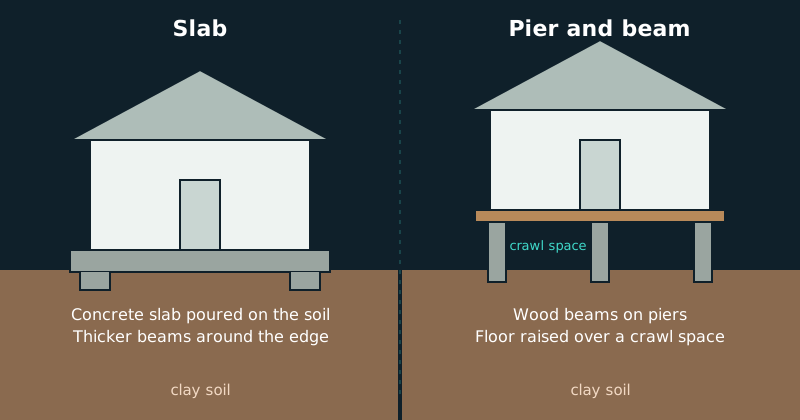
How to tell if your home is pier and beam
Walk around the outside of the house. Pier and beam homes usually have small vents or a hatch near the ground, and the floor sits a step or more above the yard. Inside, the floors may feel slightly springy, and you might hear a hollow sound when you walk. A slab home won't show any of these.
What a crawl space visit should cover
- The condition of each pier and whether any have sunk or tilted
- Shims that are loose, crushed or missing
- Beams and joists, with photos of any rot, cracks or insect damage
- Standing water, damp soil or a missing vapor barrier
- Vents, plumbing leaks and anything stored in the crawl space that traps moisture
Older homes along the corridor
Many pier and beam homes in this area are older, with original wood framing. That is not a problem by itself. Older wood is often sound, but it has had more years to meet moisture and insects. Ask the company to point out any rot or insect damage in photos, and ask whether the price changes if more damage turns up once the work starts.
Keep the crawl space dry after the repair
Most pier and beam trouble starts with water. After a releveling, keep gutters flowing away from the house, keep vents clear of mulch and plants, and look under the house after heavy rain. A dry crawl space keeps new shims and wood in good shape for longer. See drainage and soil moisture for simple fixes.
Help in your town
Read what the ground is like and what homeowners ask in New Braunfels, San Marcos, Lockhart and Martindale, or see the full service area.
How the inspection works
- Send a request or callFill in the short form or call (726) 610-5892. Tell us your town and what you are seeing.
- A company contacts youA local foundation repair company calls to set a time that works for you.
- The visitThe inspector measures floor levels, looks at cracks, doors and drainage, and checks the crawl space if there is one.
- Written findingsYou should get the findings and any repair plan in writing, so you can compare it with other quotes.
Last updated October 2026.
Request an inspection
Tell us what you are seeing. A local foundation repair company will contact you to schedule a visit.
Prefer to talk? Call (726) 610-5892.
Most companies offer a free inspection. Confirm when you book.
Common questions
How often should a pier and beam house be releveled?
There is no fixed schedule. Many owners have it checked when floors start to feel uneven or after a long drought. A yearly look at the crawl space catches rot and moisture early.
Is pier and beam repair cheaper than slab repair?
Not always. Access is easier, but rotted wood, moisture work and large floor areas can raise the price. Compare quotes for the same scope.
Can I check my crawl space myself?
If you are comfortable doing so, you can look through the access panel with a flashlight. Do not crawl under the house if it is wet, tight or has signs of animals or exposed wiring. Ask the company for photos instead.
Ready to have someone look at it?
Tell us what you are seeing. It takes about a minute, and photos are optional.